

NASA Is Building a Moon Base, and It Could Change Humanity Forever
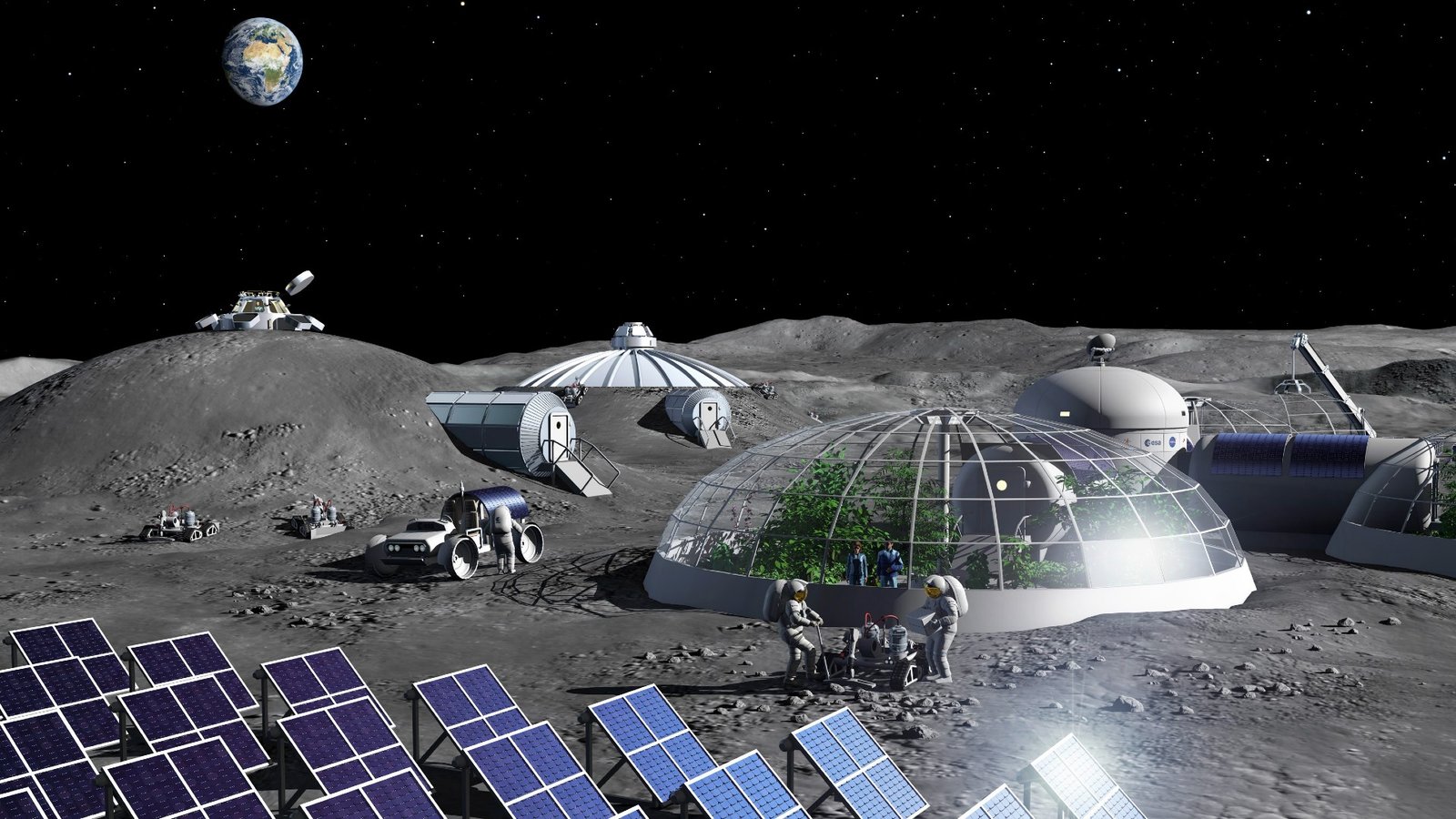
For the first time in history, humans are no longer planning short visits to the Moon. NASA has unveiled a roadmap to build a permanent lunar base near the Moon’s south pole, a landmark moment that could mark the start of human life beyond Earth.
This is more than another space mission. Scientists say it could be the biggest step yet toward making humans an interplanetary species.
The Game Changer
NASA’s Artemis program aims to establish a long-term human presence on the Moon using advanced lunar habitats, robotic systems, AI, powered rovers, and reusable spacecraft. The agency will send robotic missions first, then astronauts who will help assemble semi-permanent living modules on the lunar surface. Over time, the base could support scientific laboratories, resource mining, and missions to Mars.
Unlike the Apollo missions of the 1960s, this effort is meant for staying.
Why the south pole
The Moon’s south pole is special because scientists believe it contains frozen water ice hidden inside permanently shadowed craters. These craters never receive sunlight, keeping temperatures cold enough to preserve water ice for billions of years.
That water could become:
• Drinking water for astronauts
• Oxygen for breathing (through electrolysis)
• Hydrogen fuel for rockets (by splitting water into hydrogen and oxygen)
Technology and infrastructure
NASA plans to rely on advanced solar power, autonomous robots, and next generation spacesuits designed for extreme lunar conditions. Think of it as building the first small research city in one of the harshest environments imaginable, except it’s 384,000 kilometers from Earth.
The Challenges Ahead
Building a permanent Moon base comes with serious challenges:
• Radiation: Without Earth’s protection, astronauts face cosmic rays and solar radiation. Habitats will need strong shielding using lunar soil.
• Extreme Temperatures: Temperatures can drop to -173°C in shadows and rise sharply in sunlight. Equipment must work in both.
• Lunar Dust: Sharp, abrasive dust can damage machinery and harm lungs if inhaled.
• Psychological Stress: Isolation and confinement far from Earth can affect mental health.
• Cost and Logistics: Building and sustaining a base is expensive. Reusable rockets and global partnerships will be essential.
Despite these hurdles, NASA believes they can be overcome with technology, planning, and cooperation.
The Human shift
A permanent Moon base would reshape how people think about civilization. Future generations may grow up seeing space travel as routine. Entire new industries, careers, and scientific fields could arise around lunar exploration. Perhaps most powerfully, missions like this inspire young people worldwide to pursue science, technology, engineering, and research.
Humanity has spent centuries looking at the Moon from Earth. Now, for the first time, we are preparing to live there.
Benefits For Life On Earth
History shows space technology often brings unexpected benefits down here. Moon program developments could accelerate better solar energy systems, more capable robotics and AI, improved satellite communication, medical advances for extreme environments, and faster progress in engineering and materials science. Lunar research could also improve our ability to respond to planetary threats and plan for long,term survival beyond Earth.
This mission could lead to:-
• Better solar energy systems
• Improved satellite communication
• New medical technologies for extreme environments
• Faster innovation in engineering and materials science
The Final Leap
Humanity has stood on Earth for hundreds of thousands of years, looking up at the Moon, wondering what it would be like to live there. For centuries, it was just a dream, a distant orbit of light that guided travelers, inspired poets, and sparked imagination. Now, that dream is becoming reality. The Moon base is not just about planting a flag or building a habitat. It is about taking the first real step toward becoming a multi,planet species. It is about ensuring that humanity does not put all its eggs in one basket. It is about giving future generations a future beyond Earth. This is the moment when we stop being a single,planet civilization and start becoming something greater. The Moon is no longer just a place we visit. It is the first home we will build beyond Earth. And from there, the universe awaits.