

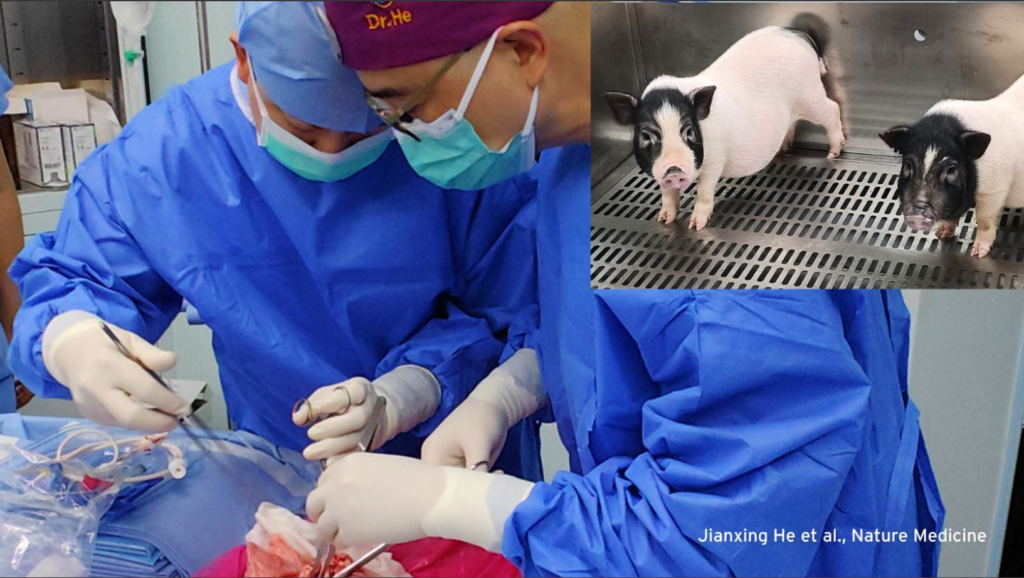
Scientists Just Grew a Working Human Food Pipe in a Lab, And It Actually Worked Inside Living Animals. For decades, growing fully functional human organs in laboratories sounded like pure science fiction.
Now, scientists may have taken one of the biggest steps ever toward making that future real. Researchers from University College London (UCL) and Great Ormond Street Hospital have successfully created the world’s first lab-grown oesophagus, the muscular food pipe that carries food from the throat to the stomach, and implanted it into living pigs.
Even more astonishing? The animals were able to swallow food normally after the transplant. Scientists are calling this a major breakthrough in regenerative medicine, and experts believe it could eventually transform treatment for children born with severe oesophagus defects and adults suffering from cancer-related damage.
The Breakthrough: A Living Organ Grown in a Laboratory
The oesophagus is not just a hollow tube. It is an incredibly complex organ made of muscles, nerves, blood vessels, and layered tissues that work together to move food into the stomach through coordinated contractions called peristalsis. Recreating something this complicated in a lab has been one of medicine’s biggest challenges. But now, researchers have managed to engineer a living oesophagus that functioned successfully inside growing animals.
The team started with oesophagus tissue taken from donor pigs. They carefully removed all original cells from the tissue, leaving behind only the natural structural framework, known as a biological scaffold.
Then came the revolutionary part.
Scientists collected cells from the recipient pigs themselves and turned them into stem-cell-like repair cells in the lab. These cells were injected into the empty scaffold, where they began rebuilding the organ with living tissue.
The engineered oesophagus was matured inside a special bioreactor a machine that mimics conditions inside the body, before being surgically transplanted. After implantation, the lab-grown tissue successfully integrated into the animals’ digestive systems.
The pigs could swallow food, eat normally, and continue healthy growth.
How Does the Science Actually Work?
The science behind this breakthrough sounds futuristic, but the core idea is surprisingly simple. Instead of creating an artificial organ completely from synthetic materials, scientists use nature’s own blueprint.
Every organ has an extracellular matrix, a natural biological structure that gives tissues their shape and strength. By removing all original cells from a donor organ, researchers create a “blank scaffold” that keeps the organ’s architecture intact. Think of it like stripping a building down to its steel framework. Then, the recipient’s own cells are added back onto that structure.
Because the new tissue is built using the patient’s own cells, the immune system is far less likely to reject it. That means patients may not need lifelong immune-suppressing drugs, one of the biggest problems in modern organ transplantation. Over time, the implanted tissue begins developing working muscles, nerves, and blood vessels inside the body.
In this study, researchers found that the engineered oesophagus gradually developed functional tissue organization capable of supporting swallowing. That is what makes this breakthrough so important. Scientists did not simply grow tissue, they grew tissue that actually worked.
Why This Could Change Human Lives Forever ?
This technology could completely transform treatment for children born with a rare condition called long-gap oesophageal atresia, where parts of the food pipe are missing.
Today, those children often require multiple painful surgeries. In severe cases, surgeons must pull the stomach upward into the chest or use sections of the intestine to replace the oesophagus. These procedures are extremely invasive and can create lifelong complications. A personalised lab-grown oesophagus could someday offer a safer and more natural replacement.
The breakthrough could also help adults whose oesophagus has been damaged by cancer, injuries, acid burns, or severe diseases. Instead of depending on donor organs or highly invasive reconstructive surgery, doctors may eventually be able to grow replacement tissue specifically designed for each patient.
Researchers believe this approach could also help advance the future of lab-grown organs beyond the oesophagus, including intestines, airways, bladders, and other complex tissues.
The Bigger Social Impact
This breakthrough represents something far larger than a single medical achievement. It signals the beginning of a new era in medicine where damaged body parts may someday be rebuilt instead of merely repaired.
Around the world, millions of people die waiting for organ transplants because donor organs are extremely limited. Tissue engineering could eventually reduce dependence on donor shortages and make personalised replacement organs possible. For children born with life-threatening conditions, this technology could mean fewer surgeries, shorter hospital stays, and dramatically better quality of life.
And for humanity as a whole, it raises a profound possibility: The future of medicine may not rely on finding replacement organs from donors, but on growing them inside laboratories. What once sounded impossible is now becoming reality, And this may only be the beginning.
Sources:
Nature Biotechnology, Nature, University College London (UCL), Great Ormond Street Hospital