

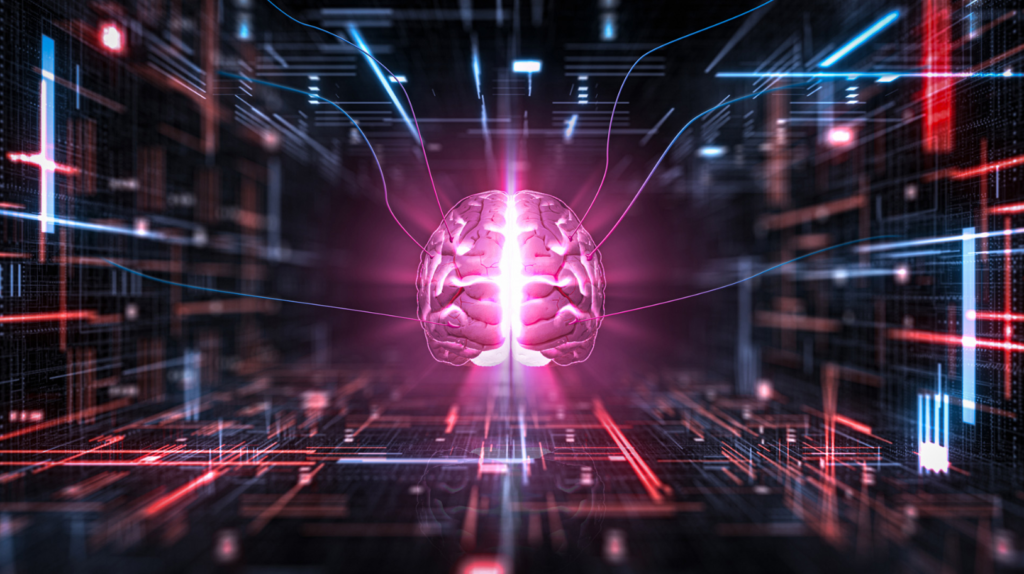
What if the future of computing isn’t built entirely from silicon chips? What if tomorrow’s most powerful computers contain living human brain cells?
That idea sounds like science fiction, but it is rapidly becoming reality. Researchers and biotechnology companies are now developing a completely new kind of computer that combines living neurons with traditional electronics. One of the most notable examples is the CL1 biological computer developed by Cortical Labs.
Scientists believe this technology could eventually lead to computers that learn more efficiently, consume less energy, and solve problems that challenge even today’s most advanced AI systems.
What Exactly Is a Biological Computer?
A biological computer is a computing system that combines living brain cells with electronic hardware. Traditional computers process information using silicon transistors. Every calculation, image, video, and AI model ultimately relies on billions of tiny electronic switches turning on and off.
The human brain works differently.
Instead of transistors, the brain uses neurons that communicate through electrical and chemical signals. These neurons constantly adapt, reorganize themselves, and learn from experience. Researchers are now attempting to harness some of these natural abilities by integrating living neurons directly with electronic systems. The result is a hybrid machine that sits somewhere between biology and technology.
The Science Behind the Breakthrough
The human brain contains roughly 86 billion neurons. These cells form vast networks capable of learning, recognizing patterns, making decisions, and adapting to new situations. Scientists grow neurons in carefully controlled laboratory environments and place them onto specialized electronic interfaces. These interfaces allow the neurons to receive signals from computers and send signals back.
When stimulated, the neurons begin forming networks and responding to information. Researchers can then observe how these biological networks process tasks, recognize patterns, and adapt to changing conditions.
This field is often referred to as Synthetic Biological Intelligence because it combines biological learning systems with artificial computing platforms.
How Does It Actually Work?
Imagine a normal computer trying to solve a problem. The computer follows instructions programmed by engineers and performs calculations at incredible speed.
A biological computer works differently.
The neurons receive electrical inputs from the electronic hardware. As they interact, they begin modifying their connections and learning from the information they receive. In some experiments, living neurons have successfully learned simple tasks and adapted their behavior based on feedback.
Rather than simply executing instructions, the biological network can change itself in response to experience. This ability to adapt is one of the biggest reasons scientists are excited about the technology.
Why Are Scientists So Excited?
Modern AI systems are incredibly powerful, but they require enormous amounts of computing power and electricity. Training advanced AI models can consume massive amounts of energy and require expensive data centers filled with thousands of computer chips.
The human brain, by comparison, performs astonishingly complex tasks while using roughly the same amount of power as a small light bulb. Researchers hope biological computers could eventually combine the best aspects of both worlds: the adaptability of living brains and the speed of modern electronics.
If successful, future computing systems may become dramatically more energy efficient than today’s AI infrastructure.
Potential Applications
Although the technology is still in its early stages, scientists see enormous potential. Biological computers could help researchers study neurological diseases such as Alzheimer’s, Parkinson’s disease, and epilepsy. Instead of experimenting directly on humans, scientists may be able to observe how living neural networks respond to different treatments.
The technology may also improve robotics. Robots equipped with more brain-like processing systems could potentially adapt better to unfamiliar environments. Artificial intelligence is another major area of interest. Future AI systems might learn faster, require less training data, and operate using far less energy than current models.
Drug discovery, neuroscience research, and advanced simulations could all benefit from biological computing platforms.
The Ethical Questions?
Like many groundbreaking technologies, biological computers raise important ethical questions. Researchers must carefully consider how living neurons are obtained, how they are used, and what ethical boundaries should exist as the technology advances.
There are also questions about consciousness.
Current biological computers are not conscious and do not think like humans. The neural networks used today are extremely simple compared with a real human brain. However, as the technology becomes more sophisticated, scientists and ethicists will need to determine where important ethical lines should be drawn.
How Could This Affect Society?
If biological computing becomes practical, it could reshape multiple industries. Future computers may consume less electricity, reducing the environmental impact of large AI systems. Healthcare researchers may gain powerful new tools for studying neurological disorders. Advanced AI could become more accessible and affordable.
Countries investing in biotechnology and artificial intelligence may also gain significant technological advantages. Just as silicon chips helped launch the digital revolution, biological computing could become the foundation of an entirely new era of technology.
What Could Happen in the Future?
Many experts believe biological computers are still at the beginning of their journey. Over the next decade, researchers hope to build larger neural networks, improve communication between neurons and electronics, and develop practical applications for industry.
Some scientists imagine future computers that combine silicon processors, quantum components, and biological neural systems in a single machine. Others believe biological intelligence could help create AI systems that learn more like humans and consume a fraction of the energy required today.
While many challenges remain, one thing is becoming clear:
The future of computing may not be purely digital. It may be partly alive.
Sources:
Cortical Labs
https://corticallabs.com
Tom’s Hardware
https://www.tomshardware.com/tech-industry/big-tech/new-3d-device-computes-using-living-brain-cells-bioelectronic-device-uses-3d-electronic-mesh-design-paired-with-living-tissue
Nature Biotechnology
https://www.nature.com/subjects/biological-engineering