
Imagine an artificial intelligence system that studies millions of life forms across Earth from deep-sea organisms and fungi to plants, animals, and bacteria and uses that knowledge to design future medicines.
That is exactly what scientists are now building.
A revolutionary AI system called EDEN is being trained on biological information collected from nearly 1 million different species. Researchers believe this could completely transform how humans discover medicines, fight diseases, and even understand life itself. (El País)
Many experts are calling this one of the most important biotechnology breakthroughs of the decade because it combines:
- Artificial Intelligence,
- Evolutionary Biology,
- Genetics,
- and Advanced Medical Research.
And the possibilities are enormous.
What Exactly Is EDEN?
EDEN is not just another chatbot or search engine. It is a biological AI system trained to understand how nature solves problems.
For billions of years, living organisms have evolved survival mechanisms:
- some bacteria naturally destroy harmful microbes,
- some plants produce anti-cancer chemicals,
- some animals regenerate damaged tissues,
- and some marine organisms survive in extreme environments impossible for humans.
Nature has already performed billions of years of “research and development.” Scientists now want AI to study those biological solutions and apply them to human medicine. Instead of manually testing endless chemicals in laboratories, researchers are teaching AI to recognize hidden biological patterns across life itself. This is a massive shift in how science works.
The Science Behind This Breakthrough
Every organism on Earth contains biological information inside:
- DNA,
- RNA,
- proteins,
- enzymes,
- and cellular systems.
These biological systems interact in highly complex ways. Traditionally, scientists study them one-by-one, which takes years. But modern AI systems can analyze gigantic amounts of data much faster than humans.
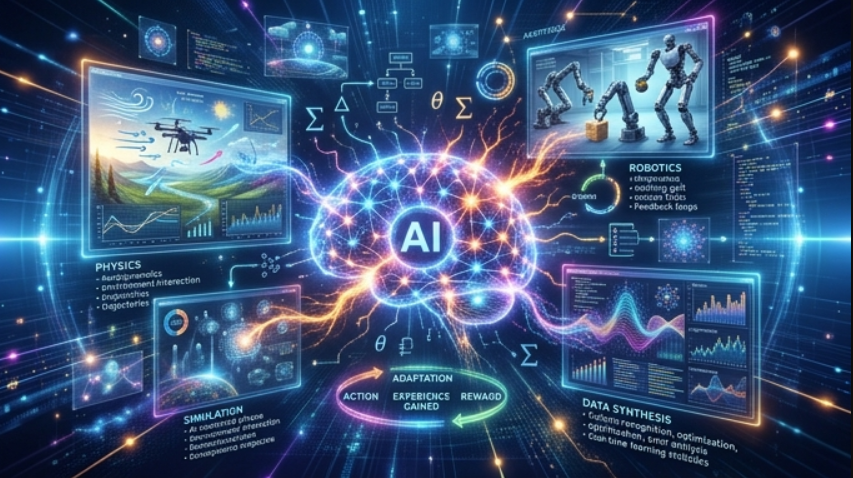
EDEN uses advanced machine learning models to:
- compare genetic information,
- analyze protein structures,
- identify evolutionary patterns,
- and predict useful biological behaviors. (Nature Biotechnology)
The AI searches for hidden connections that human researchers may never notice manually.
For example:
- a protein found in a deep-sea organism might help repair human cells,
- or a chemical used by fungi to defend themselves could become a future antibiotic.
The AI can detect these possibilities by studying patterns across millions of species simultaneously. This is why researchers say biology is becoming “programmable.”
How Does It Actually Work?
The system is trained using enormous biological datasets collected from:
- research laboratories,
- genome databases,
- medical studies,
- and environmental biology projects.
The AI studies:
- molecular structures,
- genetic mutations,
- disease behaviors,
- and protein interactions.
Then it predicts:
- which molecules may treat diseases,
- which proteins could repair tissues,
- or which natural compounds could fight cancer.
Think of it like this:
ChatGPT predicts words based on language patterns. EDEN predicts biological solutions based on patterns found in nature. The difference is that EDEN is learning the “language of life.” (PMC Research Database)
Why Is This So Revolutionary?
Traditional drug discovery is incredibly slow and expensive. Creating a new medicine often takes:
- 10–15 years,
- billions of dollars,
- and thousands of failed experiments.
Many drugs fail during human testing after years of research. AI could dramatically reduce this process. Instead of scientists manually testing millions of chemical combinations, AI can narrow the search down to the most promising candidates in weeks or months.
This could completely transform:
- pharmaceutical companies,
- hospitals,
- medical research,
- and biotechnology industries.
Experts believe AI-driven biology may become as important in healthcare as computers became for communication. Diseases This Could Help Fight Researchers believe systems like EDEN could help accelerate treatments for:
- cancer,
- Alzheimer’s disease,
- genetic disorders,
- rare diseases,
- antibiotic-resistant infections,
- autoimmune diseases,
- and future pandemics.
One of the biggest advantages is personalized medicine. In the future, doctors may use AI to create treatments specifically designed for an individual person’s genetics. Instead of “one medicine for everyone,” healthcare could become fully customized.
The Social Impact Could Be Massive
If this technology succeeds on a global scale, it may reshape society in ways similar to the internet revolution.
Possible impacts include:
- cheaper medicines,
- faster diagnosis,
- longer human lifespans,
- improved healthcare access,
- and reduced healthcare costs worldwide.
Developing countries could especially benefit if medicine production becomes faster and cheaper. Scientists also believe AI-driven biotechnology may help humanity respond much faster to future health emergencies. The COVID-19 pandemic showed how important rapid vaccine development can be. Future AI systems may design vaccines in days instead of years.
But There Are Also Concerns :
Like every powerful technology, this breakthrough raises important ethical questions. Some experts worry about:
- misuse of genetic engineering,
- AI-designed biological risks,
- privacy concerns involving genetic data,
- and unequal access to advanced treatments.
There are also concerns that extremely powerful biotech systems could be controlled only by large corporations or governments. Because of this, scientists are calling for stronger global regulations and ethical oversight as AI biotechnology grows.
What Could Happen in the Future?
Researchers believe this is only the beginning. Future possibilities may include:
- AI-designed organs,
- regenerative medicine,
- anti-aging therapies,
- personalized cancer vaccines,
- and instant disease prediction systems.
Some scientists even believe AI may eventually simulate entire biological systems digitally before treatments are tested in humans. This could reduce animal testing and make medicine development dramatically safer and faster. The merging of AI and biology may eventually become one of the defining technological revolutions of the 21st century. And right now, humanity is only seeing the first steps.
Sources: