
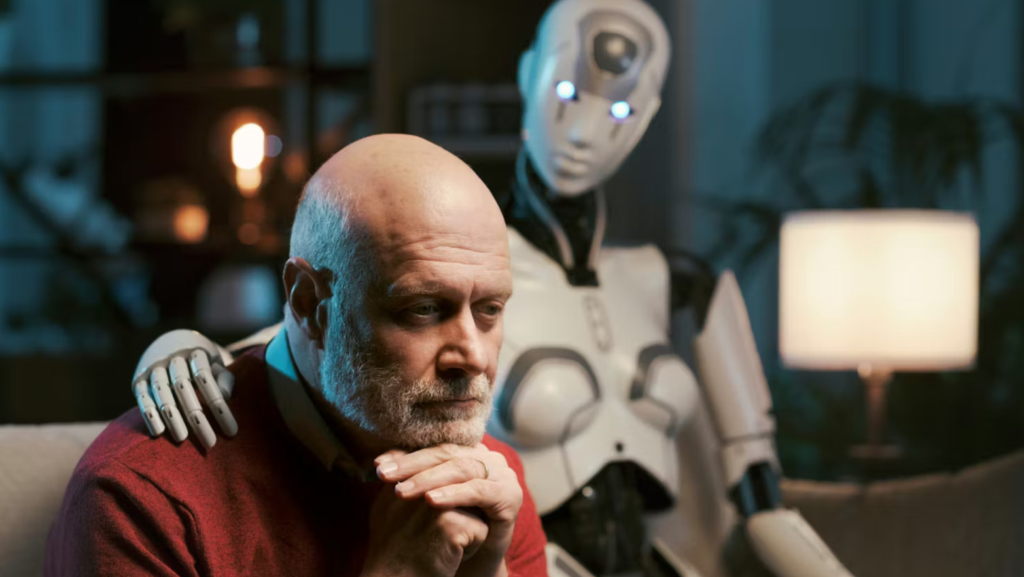
Artificial Intelligence is no longer just answering questions, generating images, or writing code. Scientists are now developing AI systems that can actually help create new scientific discoveries.
In one of the most exciting recent breakthroughs in technology, researchers at Google revealed advanced AI systems capable of:
- generating scientific hypotheses,
- analyzing massive research data,
- simulating experiments,
- and even helping scientists search for new cancer treatments.
Many researchers believe this could mark the beginning of a completely new era where AI becomes a genuine “scientific co-scientist.” And if successful, this technology could dramatically accelerate the speed of human discovery.
What Exactly Is an AI Co-Scientist?
Traditionally, scientists spend years:
- studying previous research,
- analyzing data,
- forming hypotheses,
- designing experiments,
- and testing ideas.
This process is extremely slow because modern science produces enormous amounts of information every single day. No human can fully read and understand all scientific papers being published worldwide. That is where AI enters the picture.
These new AI systems are being trained on:
- research papers,
- medical databases,
- chemistry data,
- biological systems,
- physics models,
- and experimental results.
The goal is not simply to give answers. The goal is to help scientists think faster and discover patterns humans may never notice alone
The Science Behind This Breakthrough ?
Modern AI systems use something called large-scale machine learning models. These systems learn patterns from enormous amounts of information.
For example:
- ChatGPT learns patterns in language,
- image AIs learn visual patterns,
- while scientific AI learns patterns hidden inside research and experiments.
Scientists are now combining:
- deep learning,
- simulation models,
- biological databases,
- and advanced computing systems
to build AI capable of scientific reasoning.
The AI can:
- scan millions of scientific papers,
- compare research findings,
- identify hidden relationships,
- predict possible outcomes,
- and suggest entirely new research directions.
In simple words:
The AI acts like a super-fast research assistant that never gets tired. (Business Insider)
How Does It Actually Work?
Imagine a cancer researcher trying to discover a new treatment.
Normally, they may spend:
- years studying proteins,
- testing molecules,
- reading research papers,
- and running experiments.
An AI co-scientist can dramatically speed this process up.
The AI analyzes:
- genetic data,
- protein structures,
- medical studies,
- chemical interactions,
- and previous experiments.
Then it predicts:
- which molecules might work,
- which experiments are most promising,
- and which biological pathways could be important.
Instead of manually testing millions of possibilities, scientists can focus only on the strongest AI-generated predictions. This could reduce years of research into months.
Why Is This So Revolutionary?
Human scientific progress has always been limited by:
- time,
- computing power,
- and the human brain’s ability to process information.
But AI systems can analyze gigantic datasets far beyond human capacity. This may allow humanity to solve problems previously considered impossible.
Potential areas where AI co-scientists may help include:
- cancer research,
- climate modeling,
- quantum physics,
- drug discovery,
- energy systems,
- neuroscience,
- and space exploration.
Some researchers believe AI could eventually help humans discover entirely new scientific laws.
Could AI Actually Discover New Things Humans Missed?
Possibly yes.
AI systems are very good at finding patterns inside enormous amounts of complex data. Sometimes the relationships are too subtle for humans to notice manually.
For example:
- AI has already helped discover new proteins,
- predicted molecular structures,
- and accelerated medical research.
Now scientists are pushing this even further:
toward AI systems that can actively participate in scientific reasoning itself. This is why experts call it a possible “co-scientist” rather than just a tool.
The Social Impact Could Be Massive
If AI-assisted science becomes successful, the impact on society could be enormous.
Possible future benefits include:
- faster medical breakthroughs,
- cheaper drug development,
- improved healthcare,
- faster clean energy research,
- and quicker solutions to global crises.
Smaller laboratories and developing countries may also gain access to powerful research assistance previously available only to elite institutions. This could democratize science worldwide.
But There Are Also Big Concerns :
Like every powerful technology, AI-driven science raises important ethical questions.
Experts worry about:
- misinformation in research,
- AI-generated scientific mistakes,
- misuse of biotechnology,
- and overreliance on AI systems.
Some scientists also fear that future AI systems may become so advanced that humans no longer fully understand how certain conclusions are reached.
This is why researchers are emphasizing:
- transparency,
- human oversight,
- and ethical regulation.
Most experts agree that AI should assist scientists — not replace them completely.
⸻
What Could Happen in the Future?
Many researchers believe this is only the beginning.
In the future, AI systems may:
- design medicines automatically,
- simulate entire diseases digitally,
- predict pandemics before outbreaks spread,
- or help invent completely new materials and technologies.
Some experts even imagine future laboratories where:
- humans,
- robots,
- and AI systems
work together continuously on scientific discovery.
This could create one of the fastest periods of innovation in human history.
⸻
The Bigger Picture
Human civilization is entering a new era where science itself may become AI-accelerated. For centuries, scientific progress depended entirely on human observation and experimentation. Now, humanity is creating machines capable of helping us think scientifically.
If successful, AI co-scientists may eventually transform:
- medicine,
- energy,
- biology,
- computing,
- and our understanding of the universe itself.
And the world may only be witnessing the very beginning of this revolution.
Sources:
Business Insider
https://www.businessinsider.com/google-ai-co-scientist-yossi-matias-scientific-discovery-cancer-2026-5
Google Research Overview
https://research.google
Nature AI & Science Coverage
https://www.nature.com/subjects/artificial-intelligence