

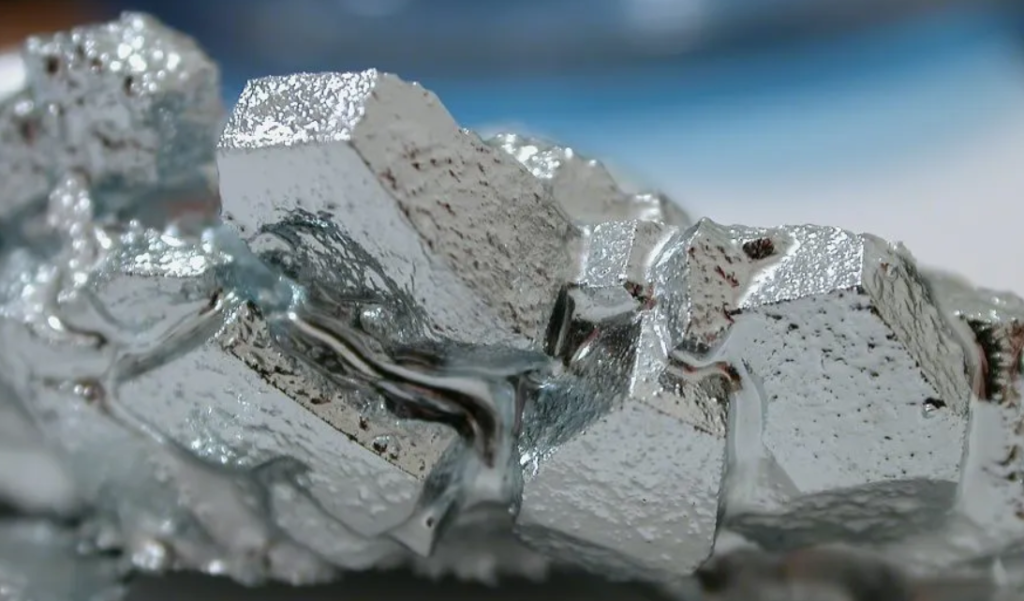
For centuries, humans believed that once metal cracks, the damage is permanent. Bridges weaken. Airplanes develop microscopic fractures. Machines slowly wear out over time. But now, scientists have discovered something that sounds almost impossible: Certain metals can actually heal themselves.
In one of the most shocking recent breakthroughs in material science, researchers observed microscopic cracks inside metal closing and repairing themselves automatically without any human intervention. This discovery is so unexpected that some scientists say it could completely change the future of engineering, manufacturing, robotics, aerospace, and even space technology.
What Exactly Happened?
Researchers from Sandia National Laboratories and Texas A&M University were studying how tiny pieces of metal behave under repeated stress. During the experiment, they watched microscopic cracks form inside a nanoscale piece of platinum. Normally, cracks spread over time until the material eventually breaks. But something unbelievable happened.
Instead of continuing to expand, part of the crack suddenly reversed direction and fused back together on its own. The metal literally repaired itself. Scientists described this process as “autonomous healing of fatigue cracks.”
Why Is This Such a Huge Discovery?
Metal fatigue is one of the biggest engineering problems in the world.
Every day:
- airplanes experience stress,
- bridges vibrate,
- engines heat and cool repeatedly,
- and machines develop microscopic damage.
Over time, tiny cracks become dangerous failures. This is why infrastructure requires expensive inspections and repairs. Until now, scientists believed metals could not naturally recover once cracked. This new discovery challenges a fundamental assumption in material science. If researchers learn how to control this process, future materials may be able to repair themselves automatically.
The Science Behind Self-Healing Metal
The experiment was performed using an extremely powerful electron microscope. Scientists repeatedly pulled the tiny metal sample back and forth hundreds of times per second, simulating stress and fatigue.
At the nanoscale, metal atoms behave differently from how large objects behave in everyday life.
Under certain conditions:
- the atomic structure shifted,
- crack surfaces moved back together,
- and the metal reconnected itself through a process called cold welding.
Cold welding happens when two clean metal surfaces touch closely enough that their atoms bond together naturally. Normally, this does not happen because air creates oxide layers on metal surfaces. But inside the vacuum conditions of the experiment, the surfaces remained clean enough to reconnect.
In simple words:
The atoms reorganized themselves and “stitched” the crack shut.
Does This Mean Broken Cars and Phones Will Repair Themselves Soon? Not yet.
Right now, this effect has only been observed:
- at microscopic scales,
- under highly controlled laboratory conditions,
- and mainly in specific metals like platinum and copper.
Scientists still do not fully understand how to reproduce the process in large everyday objects.
However, the discovery proves something extremely important: Self-healing metals are physically possible. And that alone changes the future direction of material science.
How Could This Change Technology?
If engineers eventually control this process at larger scales, the impact could be enormous. Future applications may include: Self-Healing Airplanes
Tiny cracks inside aircraft could repair themselves before becoming dangerous. Longer-Lasting Bridges Infrastructure could survive decades longer with less maintenance. Safer Spacecraft Self-healing materials may become critical for long-duration space missions where repairs are difficult. More Durable Electronics Future phones, batteries, and devices may become more resistant to internal damage. Advanced Robotics Robots could someday repair structural damage automatically during operation. Some researchers even believe this technology could eventually combine with AI-driven smart materials. Scientists Are Already Expanding the Research
After the original discovery, researchers worldwide began developing:
- self-healing polymers,
- self-repairing coatings,
- and smart materials inspired by biological systems.
Recent studies have also explored:
- self-healing crystals,
- self-healing elastomers,
- and liquid-metal coordination systems. (Nature Communications)
Researchers at IIT Bhilai in India also developed a room-temperature self-healing polymer designed for EVs and aerospace safety. (Times of India) This field is now growing rapidly.
The Social Impact Could Be Massive :
If self-healing materials become practical, society could benefit in many ways.
Possible impacts include:
- fewer industrial accidents,
- safer transportation,
- reduced repair costs,
- less material waste,
- and lower environmental impact.
Modern civilization spends trillions of dollars replacing damaged infrastructure and machinery. Self-healing materials could dramatically reduce those costs. This may also support sustainability because products would last much longer before replacement.
The Bigger Meaning Behind This Discovery
One reason scientists are so excited is because this discovery changes how humans think about materials themselves. For generations, metal was considered passive and lifeless.
But now researchers are discovering materials that:
- adapt,
- respond,
- and potentially repair themselves.
In many ways, future materials may behave more like living biological systems than traditional machinery. Some experts believe this could eventually lead to:
- intelligent materials,
- adaptive infrastructure,
- and machines capable of partial self-maintenance.
What Could Happen in the Future?
Researchers believe this may only be the beginning.
Future breakthroughs could lead to:
- self-healing electric vehicles,
- crack-resistant spacecraft,
- AI-controlled smart materials,
- and buildings capable of monitoring and repairing their own structural damage.
Some scientists even imagine future cities built using materials that continuously repair microscopic wear automatically. What sounds like science fiction today may eventually become normal engineering. And it all started with scientists watching a tiny crack unexpectedly heal itself.
Sources:
Nature
https://www.nature.com/articles/s41586-023-06223-0
Nature Communications
https://www.nature.com/articles/s41467-026-69609-4
Times of India
https://timesofindia.indiatimes.com/city/raipur/self-healing-polymer-by-iit-bhilai-team-to-boost-safety-for-evs-aerospace-sectors/articleshow/123929105.cms